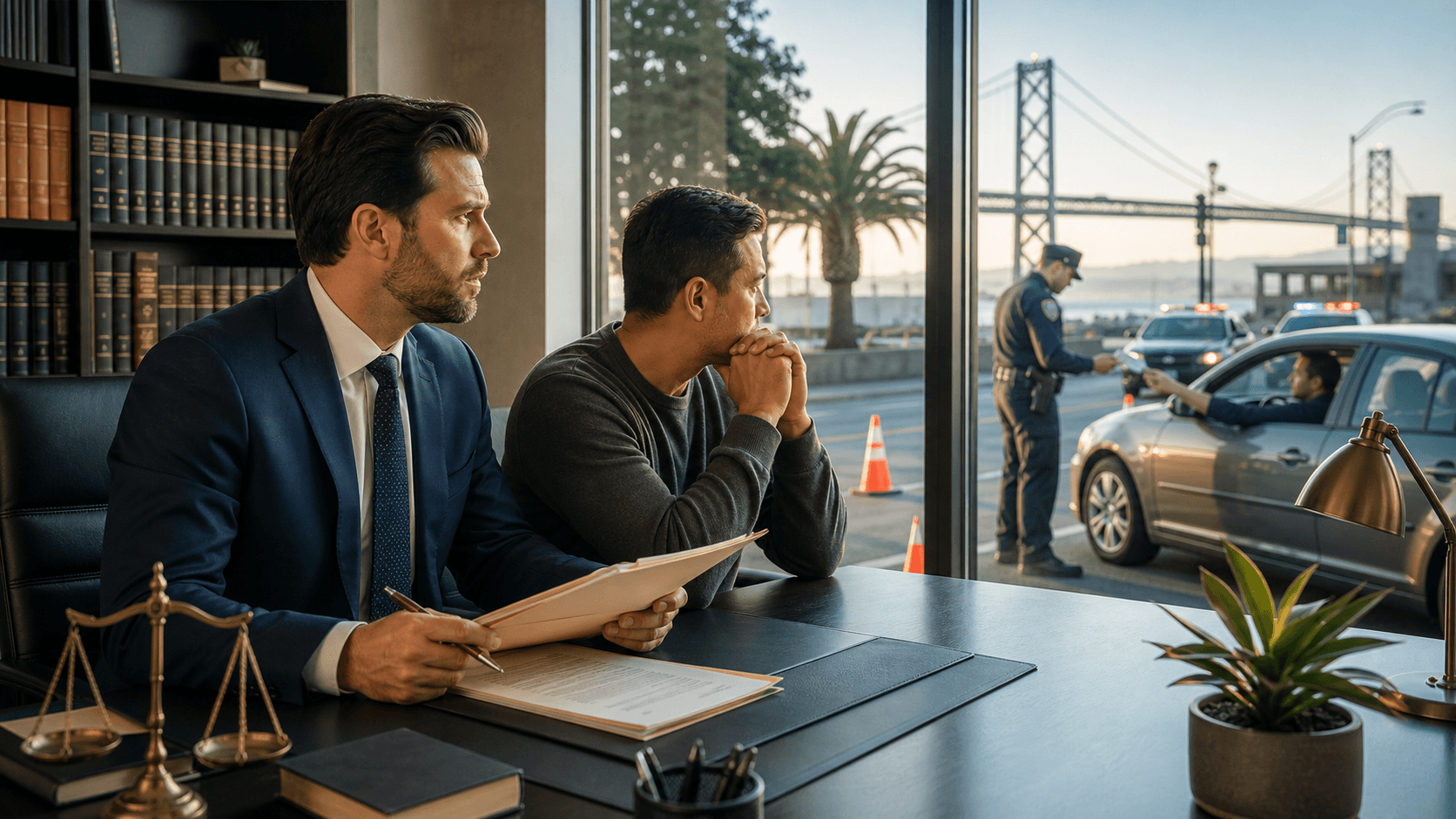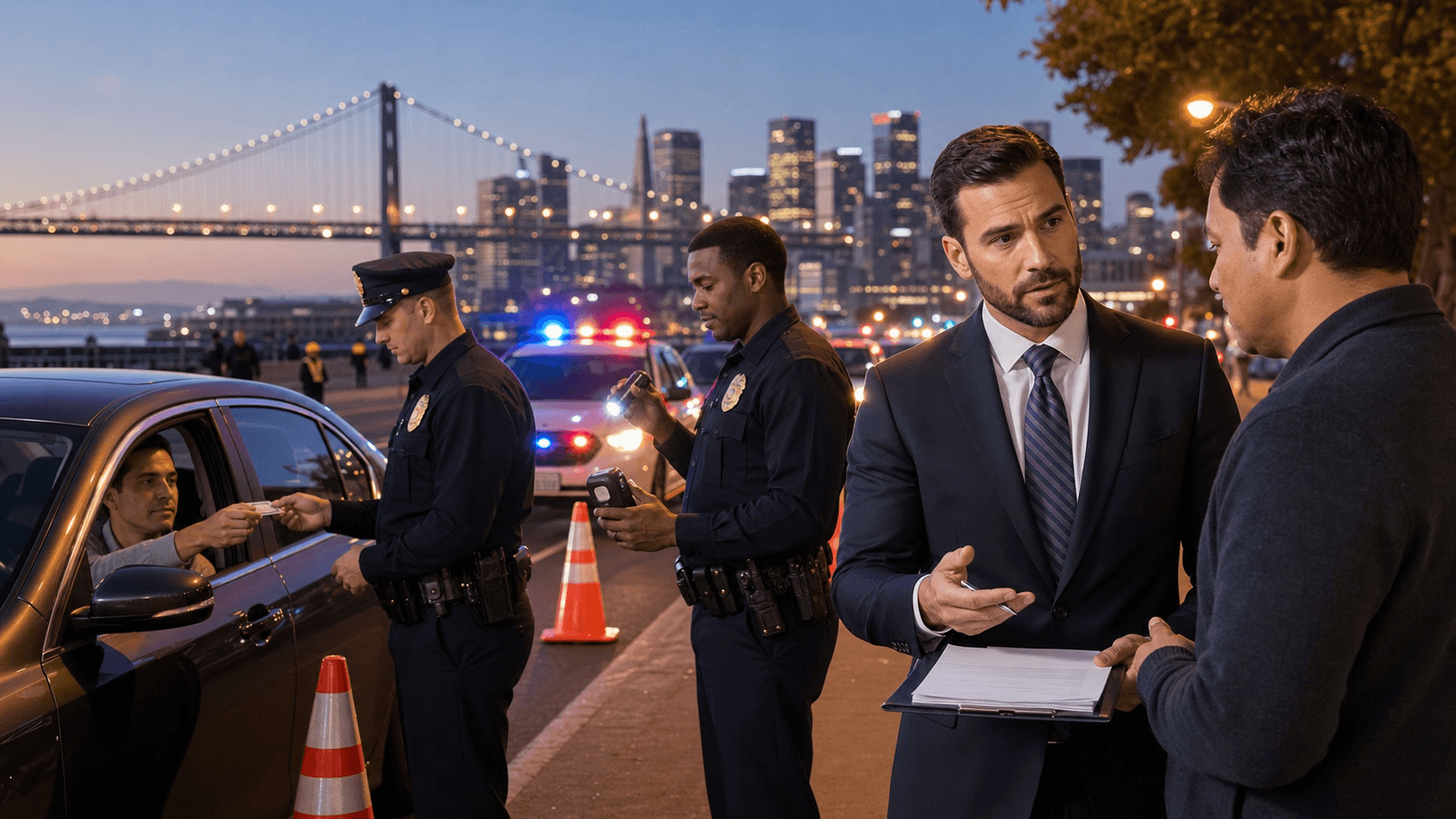
What Really Happens at a San Francisco DUI Checkpoint
DUI checkpoints in San Francisco can make even completely sober drivers feel nervous. Flashing lights, officers in the road, and a long line of cars are not anyone's idea of a relaxing night. Still, these checkpoints are legal when they follow certain rules, and understanding how they work can help you stay calm and protect yourself.
At Amin Law, led by Haitham "Sam" Amin, we focus on defending people accused of DUI and helping them understand their rights. Around holiday weekends, graduations, big games, and concerts, checkpoints tend to pop up more often across the city. In this guide, drawn from one of Haitham "Sam" Amin's weekly videos on our YouTube channel, we walk through what really happens at a checkpoint, what officers are trained to look for, what your rights are, and how you can avoid saying or doing things that might be used against you later.
How San Francisco DUI Checkpoints Are Set Up and Announced
Police do not just place a checkpoint anywhere they feel like. In general, they choose locations and times based on things like:
- Areas with busy nightlife or bars
- Roads with a history of DUI-related crashes or arrests
- Times when more people are likely to be out drinking, such as late evenings or weekends
When you approach a lawful checkpoint, you will usually see several signs that tell you what is going on. You might notice:
- Orange cones and barriers narrowing lanes
- Warning signs that say something like "DUI Checkpoint Ahead"
- Strong lighting so officers can see drivers and vehicles
- Marked police cars with emergency lights on
- Officers in reflective vests directing traffic
These details help separate a real checkpoint from a single random stop on the side of the road. At a true checkpoint, officers are supposed to follow a plan for which cars they stop, instead of pulling over only the cars they feel like stopping.
Police often announce checkpoints ahead of time through local media or official channels. That does not make them optional, but it lets drivers know they may face delays in certain areas. If you learn that checkpoints are set up in a specific part of town, planning another route is usually legal as long as you follow traffic laws and do not make unsafe or illegal turns to get away from the checkpoint.
Step-by-Step: What to Expect When You Are Stopped
Once traffic reaches the checkpoint, officers usually follow a basic pattern. Not every detail is the same every time, but most stops include:
- An officer signaling you to stop or roll forward
- A brief greeting and request for your license, registration, and proof of insurance
- A few short questions, often about where you are coming from and whether you have been drinking
While this is happening, the officer is also quietly making observations. They are trained to look and listen for signs that you might be under the influence, such as:
- Odor of alcohol from your breath or vehicle
- Slurred or slow speech
- Trouble handling your documents or obvious fumbling
- Red or watery eyes
- Confused answers or delayed responses
The officer may also look inside your car for open containers or anything else that stands out. If nothing concerns them, they usually hand your documents back and send you on your way in less than a minute.
If something does concern the officer, they may direct you to a "secondary" area, usually a nearby spot inside the checkpoint where more officers are waiting. At that point, a quick contact can turn into a full DUI investigation. This is where you might be asked more questions, told to step out of the car, or invited to perform field sobriety tests or blow into a handheld device.
Your Rights at a DUI Checkpoint and How to Use Them Safely
Even at a DUI checkpoint, you still have rights. In California, you generally must provide:
- Your driver's license
- Your vehicle registration
- Proof of insurance
You do not have to answer every question an officer asks. You have the right to remain silent so you do not accidentally say something that hurts you later. If you want to use that right, it helps to be calm and clear. Some simple phrases that are usually less confrontational include:
- "Officer, I prefer not to answer any questions."
- "I choose to remain silent respectfully."
- "I will provide my documents, but I do not want to answer questions."
Field sobriety tests are usually voluntary in many DUI situations. The same goes for a portable breath test device on the roadside for most adult drivers who are not on DUI probation, although there are exceptions, especially for drivers under 21 or those already on DUI probation.
Chemical testing, such as a blood or breath test at the station or hospital, is different. California's implied consent law means that after a lawful DUI arrest, refusing a chemical test can lead to extra penalties. The rules are not simple, which is why speaking with a DUI defense attorney in San Francisco as soon as you can after an arrest is very important for your case.
Avoiding Self-Incrimination While Staying Calm and Respectful
Many people get in trouble at checkpoints not because of how they drive, but because of what they say. Harmless-sounding questions like "How much have you had to drink?" or "Where are you coming from?" are designed to gather evidence. Even answers that seem safe, like "Just a little" or "I had one drink," can be used against you later.
To protect yourself, it helps to follow some simple behavior tips:
- Keep your hands visible on the steering wheel
- Move slowly when reaching for documents
- Speak politely, but keep your answers short
- Do not volunteer extra details or stories
- Avoid arguing or raising your voice on the roadside
Common mistakes at checkpoints include trying to joke about drinking, bragging about how much you can "handle," or nervously changing your story. Officers notice these things, and they can push the interaction deeper into an investigation. A calm, prepared mindset makes it much easier to stick to your rights without sounding hostile.
When to Call a DUI Defense Attorney in San Francisco
There are certain checkpoint situations where getting legal help quickly is especially important. You should strongly consider speaking with a DUI defense attorney in San Francisco if:
- You are taken to the secondary area and detained for more questioning
- You are placed under arrest at or after the checkpoint
- You are asked to submit to a chemical test at a station or hospital
- You feel the officers did not follow the law or treated you unfairly
In checkpoint cases, a defense lawyer will usually look at whether the checkpoint was set up and run correctly, whether officers followed their own rules, and whether any evidence can be challenged or kept out of court. At Amin Law, we carefully review the details, including video, reports, and the layout of the checkpoint, to see if your rights were respected.
Haitham "Sam" Amin also shares real-world DUI checkpoint examples and explanations through regular videos on our YouTube channel, which can help you better understand what happens out there on the road. Knowing how checkpoints work, what your rights are, and how to stay calm under pressure can make a stressful situation a lot less harmful to your future.
Protect Your Future With Proven DUI Defense
If you are facing DUI charges, you do not have to navigate the legal system alone. At Amin Law, we carefully review the details of your case to build a strategy focused on protecting your record, your license, and your freedom. Speak with an experienced DUI defense attorney in San Francisco today so we can start working on your defense immediately. Reach out now to schedule a confidential consultation and get clear guidance on your next steps.