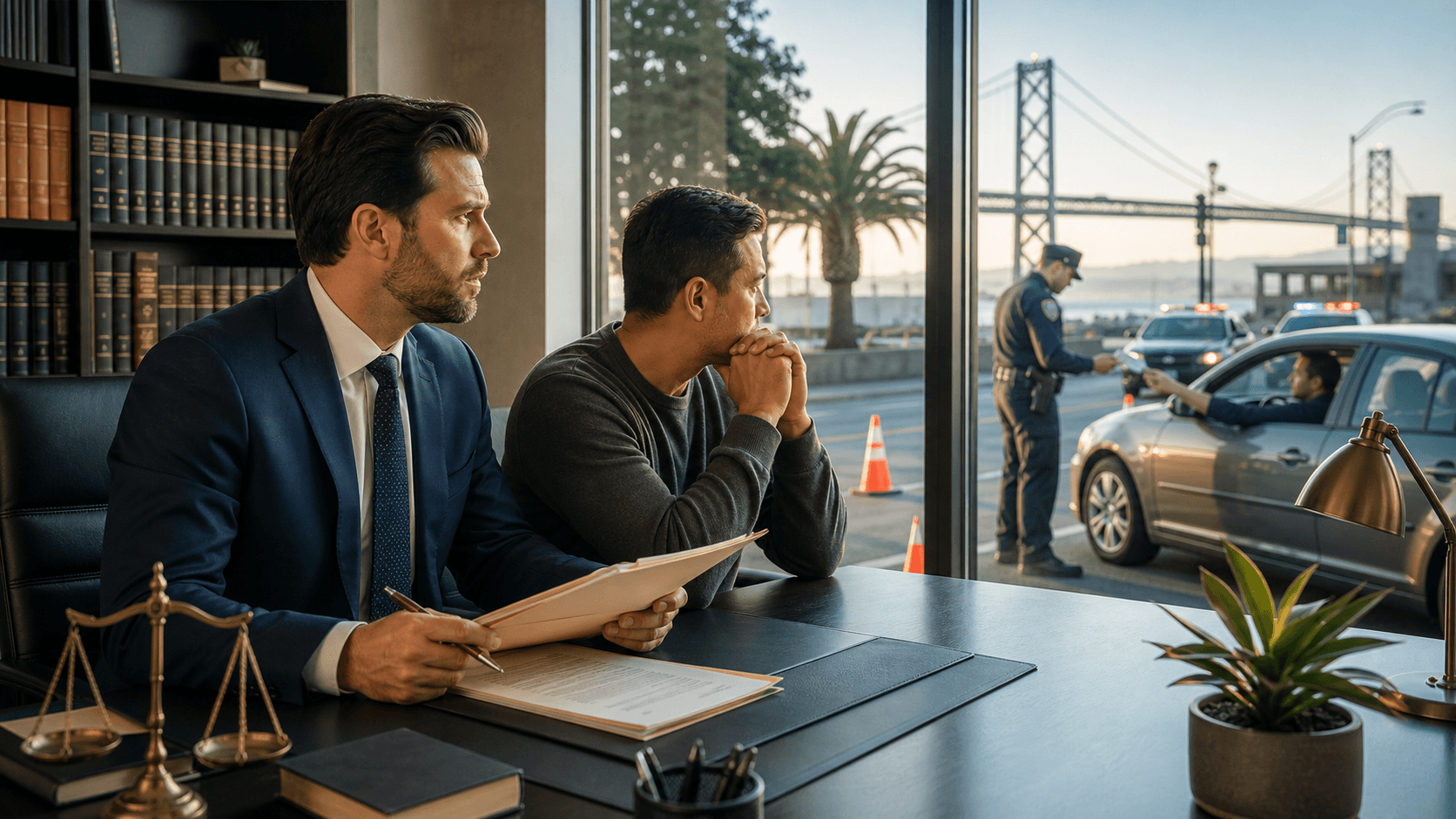
Why Checkpoint DUI Stops Demand Fast Legal Help
Getting stopped at a DUI checkpoint in San Francisco can happen fast. You are driving home on a weekend night, traffic slows down, and suddenly there are cones, bright lights, and officers waving cars through. During warmer months and around big weekends like Memorial Day or the Fourth of July, checkpoints often pop up in areas with busy nightlife. One moment you are listening to music, the next you are talking to an officer through your window.
Checkpoint DUI arrests are different from regular traffic stops. These are planned operations with multiple officers, supervisors, and a written plan that is supposed to control how cars are stopped. Officers often follow scripts and standard questions. Even with that structure, checkpoints still have to follow the Constitution, and mistakes or shortcuts can lead to defenses that many drivers never realize exist.
At my office, I have handled many DUI cases that started at checkpoints in and around San Francisco. I focus on protecting driving privileges, limiting criminal penalties, and attacking weak or unlawful checkpoint procedures. In this article, based on the guidance I share in my weekly videos on my YouTube channel, I will break down how checkpoints work in California, what rights drivers still have when they pull up to one, how a DUI attorney in San Francisco reviews checkpoint stops, and when hiring a lawyer makes sense after an arrest.
How DUI Checkpoints Work in San Francisco
For a checkpoint to be valid in California, law enforcement has to follow certain rules. These rules come from state law and court decisions. A checkpoint is not just officers deciding to stop random cars wherever they want.
Some basic requirements include:
- Advance public notice that a checkpoint will be held
- A neutral stopping pattern, like every third or fifth car
- Approval and planning by supervising officers, not just officers in the field
- Clear signs, lights, and a layout that shows this is an official checkpoint
- A location and setup that is reasonably safe for drivers and officers
During the first contact, officers are allowed to do a few specific things. They can briefly speak with you, look for obvious signs of impairment, and ask for your license and registration. They are not allowed to automatically search your car or keep you for a long time without a reason. The idea is that most drivers should be delayed only a short period.
A simple checkpoint contact can change into a DUI investigation when an officer claims to notice things like:
- Strong odor of alcohol from the driver or car
- Slurred or slow speech
- Bloodshot or watery eyes
- Open containers in view or an admission of drinking
At that point, officers may ask you to step out, do field sobriety tests, and blow into a handheld breath test. Even if someone later has a breath or blood test over the legal limit, a DUI attorney in San Francisco can challenge whether the checkpoint itself followed the rules and whether the officer had legal grounds to extend the stop.
Your Rights When Stopped at a DUI Checkpoint
Drivers generally must stop when directed at a properly marked DUI checkpoint. That does not mean you lose all your rights when you roll down the window. You still have constitutional protections, even in this stressful situation.
In most cases, you must:
- Provide your driver's license, registration, and proof of insurance
- Follow reasonable instructions for safety, like pulling to the side when told
You are not required to answer detailed questions about where you were, what you drank, or how much you had. Many people talk too much at checkpoints because they feel nervous or want to seem cooperative. As I explain in my videos, be polite, but do not help build the case against you.
Things that can matter later, and that you should tell your lawyer about, include:
- Signs or lights that were confusing or hard to see
- A stopping pattern that felt random or targeted
- A long wait in line before any officer spoke to you
- Aggressive or accusatory questioning before any signs of impairment
There are also life situations where having a DUI attorney in San Francisco is especially important, such as:
- A high breath or blood alcohol result
- Any prior DUI on your record
- An accident or injuries linked to the stop
- You are under 21 or driving on a commercial license
- You are not a U.S. citizen and are worried about immigration issues
There are strict deadlines that come up quickly after a checkpoint arrest. One major one is the short window to request a DMV hearing to fight an automatic license suspension. There is also time pressure to preserve checkpoint plans, body camera footage, and any nearby surveillance video before it is deleted or recorded over.
In my office, I usually start checkpoint cases by requesting the written checkpoint plan, reviewing officer training records, and comparing reports with any video. I look for both technical and constitutional defenses that the average person would not know to raise.
How a Skilled DUI Lawyer Attacks Checkpoint Evidence
A strong DUI defense often starts with the legality of the checkpoint itself. If the checkpoint was not set up or run properly, that can affect the whole case.
Common defense angles include:
- Showing that the checkpoint did not follow a neutral stopping pattern
- Arguing that officers went beyond the approved plan without a reason
- Proving that your detention lasted longer than allowed before any valid suspicion
- Pointing out poor lighting, unclear signs, or a layout that caused confusion
On top of that, I closely examine the DUI testing itself. Field sobriety tests at a roadside checkpoint can be very unreliable. Uneven pavement, bright lights, loud noise, and nerves all affect performance. Medical issues, age, and footwear can also make these tests unfair.
Breath and blood results can be attacked too. Problems can include:
- Poor instructions or lack of proper observation time
- Issues with the breath machine or its maintenance
- Breaks in the chain of custody for blood samples
- Delays that raise questions about what your alcohol level was at the time of driving
When these weaknesses are properly presented, outcomes can change. Charges can be reduced to lesser offenses, penalties can shrink, and license consequences can be lighter. First-time offenders, especially those stopped at checkpoints, often have more options than they realize. Local knowledge of San Francisco courts, prosecutors, and common checkpoint practices helps identify patterns of mistakes and push for better resolutions.
Take Control After a Checkpoint DUI Stop
A DUI arrest from a checkpoint can feel like the end of the road, but it is not the same as a conviction. What you do in the first days after the arrest can shape your license status, your job, and even your immigration future.
I usually suggest a few simple steps, consistent with what I discuss on my YouTube channel:
- Write down everything you remember about the checkpoint, including signs, cones, and officer instructions
- Note what the officers said and did, and how long each part of the stop took
- Keep all paperwork you were given, including citations, release forms, and towing information
Then, talk with a DUI attorney in San Francisco who understands checkpoint cases. A careful review of your stop, your rights, and the testing process can uncover defenses and options that are not obvious at first glance. That is how you move from feeling powerless to having a plan and a clear strategy for what comes next.
If you want more detail, you can also watch my weekly videos on my YouTube channel, where I break down DUI checkpoints and other California DUI issues in depth. Haitham "Sam" Amin
Protect Your Future With Experienced DUI Defense
If you are facing a DUI charge, now is the time to take control of your case and understand your options clearly. At Amin Law, we provide practical guidance so you know what to expect and how to protect your record, license, and reputation. Download our free guide from an experienced DUI attorney in San Francisco to learn the key steps you should take before your first court date. Reach out to us after reviewing the guide so we can discuss a strategy tailored to your situation.