Avoid Costly Missteps After Your First DUI Arrest
This article is based on Haitham "Sam" Amin's weekly video on our YouTube channel, where he explains the biggest mistakes people make after a first DUI arrest in San Francisco and how to avoid them.
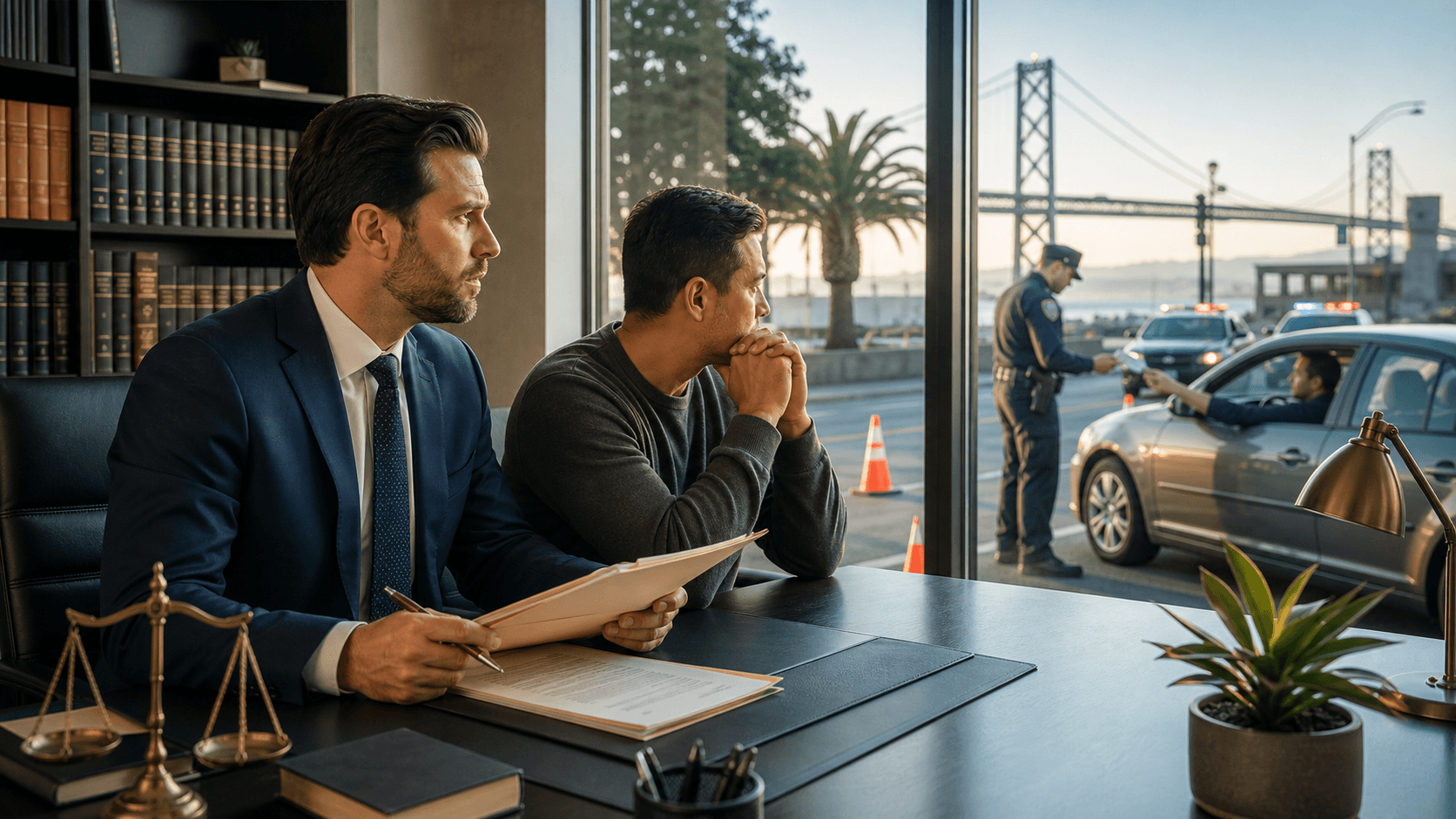
A first DUI arrest hits fast. Sirens, handcuffs, a night in custody, and a stack of paperwork you barely remember signing. Then, you are back home in San Francisco, staring at a pink slip from the DMV and a court date you do not really understand. It is stressful, confusing, and easy to feel frozen.
What many people do not realize, exactly as Sam explains in the video, is that some of the biggest problems do not come from the arrest itself. They come from what happens after. Waiting too long to get help, hiring the wrong first-time DUI lawyer, or saying the wrong thing online can do real damage to your case. These traps show up again and again in our practice and in the questions viewers ask on YouTube. Here, we are breaking down the most common mistakes Sam highlights in the video and how you can avoid them before your court date or DMV hearing.
Waiting Too Long to Call an Experienced DUI Lawyer
In the video, Sam emphasizes that time is not your friend after a DUI arrest. The clock starts the moment you are released. In California, you usually have only a short window to challenge the automatic license suspension through the DMV. If you let that deadline pass, you may lose options that could have protected your driving privileges.
Many people decide to wait. They want to see the paperwork first, talk to friends, or search the internet for quick answers. By the time they call a first-time DUI lawyer, important chances have already slipped away. Local rules in San Francisco, the way judges handle early hearings, and the way officers store video or breath test records all involve timing.
When you contact an experienced DUI attorney quickly, they can start working right away. Early steps might include:
- Requesting your DMV hearing by the deadline
- Asking for police reports, body camera video, and 911 recordings
- Reviewing whether the officer had a lawful reason to stop your car
- Checking for problems with the breath or blood testing process
Those first days are often when we can spot issues with probable cause, field sobriety test, or chemical testing. Waiting too long can mean those same issues are harder to prove later.
Choosing a Lawyer for the Wrong Reasons
After a DUI arrest, it is tempting to hire the first lawyer you find online or the one a friend used for something totally different. Some people look only at who seems cheapest, or assume any criminal lawyer will handle a first DUI the same way. In the video, Sam walks through real situations where a case was mishandled long before it reached our office, simply because the wrong person was hired at the start.
Not every attorney focuses on DUI law, and not every attorney knows how San Francisco courts and prosecutors handle first-time DUI cases. You want someone who is comfortable explaining things clearly, who understands the local system, and who can guide both your court case and your DMV case at the same time.
When you "interview" a first-time DUI lawyer, you can ask questions like:
- How many DUI cases have you handled in this county?
- How do you usually challenge breath or blood test results?
- What is your plan for my DMV hearing and my court case?
- How will you keep me updated as we move forward?
You should walk away from that first talk feeling like the lawyer understands your concerns, can explain your options in plain language, and has a real plan for your specific situation, not just a one-size-fits-all answer.
Ignoring DMV Hearings and License Consequences
One of the most common misunderstandings Sam addresses in the video is about the DMV. Many first-time DUI defendants think the only thing that matters is the criminal court case. They expect that if they "take care of court," the license will work itself out. That is not how California handles it.
The DMV process is separate from the criminal case. It has its own rules and its own strict deadlines that start right after your arrest. If you do not request a hearing in time, the DMV can move forward with suspending your license automatically, even if your court case is still pending.
Ignoring or rushing the DMV side of things can lead to:
- License suspensions that could have been challenged
- Tougher restrictions on your ability to drive
- Problems getting to work, school, or taking care of family
- Extra stress during busy times of the year when you need to be on the road
A skilled DUI lawyer will prepare you for both tracks at the same time. For the DMV, that may mean arguing that the officer did not have a lawful reason to stop you, that the arrest was not supported by the facts, or that the chemical test was unreliable. For court, it may mean looking for ways to reduce the charges, limit penalties, or protect your record. Handling both parts together usually gives you the best chance at protecting your future.
Hurting Your Own Case with Social Media and Misstatements
Another big source of trouble Sam discusses in the video is what people say and post after the arrest. It is easy to hurt your own case without even meaning to. A quick post, a group text, or a joke at work can get twisted later.
Common self-inflicted mistakes include:
- Posting about the arrest or the night out on social media
- Sharing photos or stories about drinking while the case is pending
- Messaging friends about what happened in ways that can be screenshotted
- Talking casually about the case with coworkers or acquaintances
Prosecutors can take those words or images and try to use them against you. Even if you thought you were being funny, those posts can make you look careless or dishonest. Inconsistent statements to insurance companies, to the police, or even to friends can come back later and make it harder to defend you.
Some practical, lawyer-approved guidelines Sam mentions help a lot:
- Only discuss your case in private with your attorney
- Stay away from posts about alcohol or nightlife until the case is finished
- Do not sign documents, send letters, or call the court or DMV without checking with your lawyer first
- If someone asks about your case, keep it short and say your lawyer advised you not to talk about details
When in doubt, silence is safer than guessing. Your lawyer can speak for you in a way that protects your rights.
Partner with the Right Advocate and Protect Your Future
A first DUI can feel like the end of the world, but it does not have to control the rest of your life. As Sam explains in the YouTube episode this article is based on, avoiding a few key mistakes can make a big difference. Acting quickly, choosing the right first-time DUI lawyer instead of rushing, taking the DMV process seriously, and staying quiet on social media all help keep your options open.
At Amin Law in San Francisco, we focus on helping people through exactly this kind of stressful situation. Haitham "Sam" Amin shares tips and explanations on our YouTube channel so you can understand what is happening before you walk into a courtroom or a DMV hearing room. The more informed you are, the better decisions you can make.
As you move forward, gather the paperwork from your arrest and keep it in one place. Write down everything you remember about the stop and the arrest while it is still fresh. Then, when you speak with an experienced DUI attorney, you will have the details ready so your legal team can start building the strongest possible defense for your license, your record, and your future opportunities.
Protect Your Future With Guidance You Can Trust
If you are facing your first DUI charge, you do not have to navigate the process alone. At Amin Law, we provide clear, practical steps so you understand your options and what to do next. Download our free guide and see how working with a dedicated first-time DUI lawyer can help you protect your license, your record, and your long-term future. Reach out today so we can start helping you move forward with confidence.